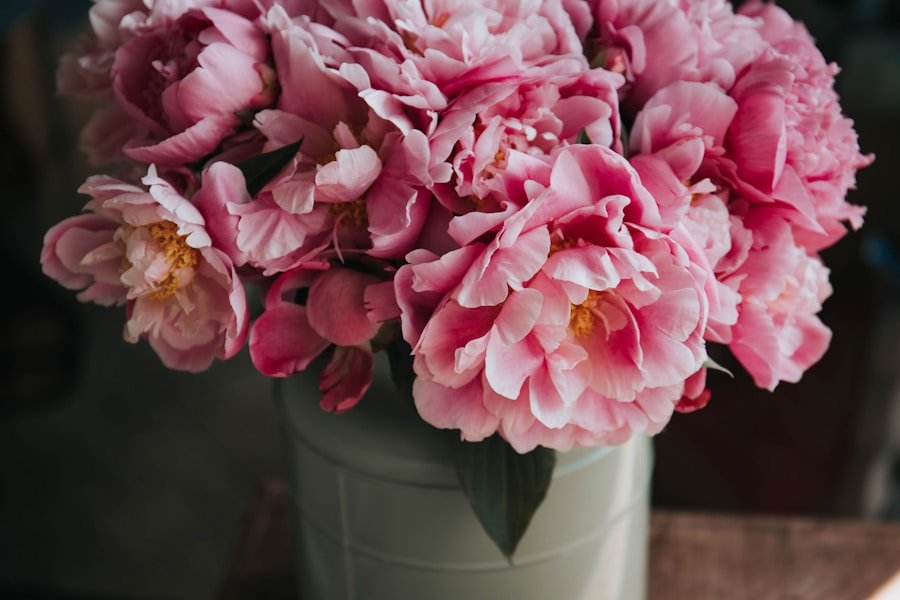

Peonies have a rich history and cultural significance that dates back thousands of years. Originating in China, peonies have been cultivated and revered for their beauty and fragrance since ancient times. In Chinese culture, the peony is known as the “king of flowers” and is a symbol of wealth, honor, and prosperity. The flower holds a special place in Chinese art, literature, and folklore, and is often associated with royalty and nobility. In fact, the peony is the national flower of China and is celebrated during the annual Peony Festival, which attracts visitors from around the world.
In addition to China, peonies have also been highly valued in Japanese culture. The flower is known as the “king of flowers” in Japan as well, and is considered a symbol of good fortune and prosperity. In Japan, peonies are often depicted in traditional art and are a popular motif in kimono designs. The flower is also celebrated during the annual Hanami festival, where people gather to admire the beauty of blooming peonies. Overall, peonies have played a significant role in the cultural traditions of East Asia for centuries, and continue to be cherished for their beauty and symbolism.
The Symbolism of Peonies in Different Cultures
The symbolism of peonies varies across different cultures, but the flower is generally associated with prosperity, good fortune, and honor. In Western cultures, peonies are often seen as a symbol of romance and love, and are a popular choice for wedding bouquets and floral arrangements. The lush, full blooms of peonies are said to represent prosperity and good luck, making them a popular choice for special occasions and celebrations.
In Chinese culture, peonies are highly revered and are often associated with wealth and honor. The flower is considered a symbol of prosperity and good fortune, and is often used in traditional Chinese art and literature to represent beauty and elegance. In Japan, peonies are also seen as a symbol of good fortune and prosperity, and are often depicted in traditional art and textiles. Overall, peonies hold a special place in the hearts of people around the world, and are cherished for their beauty and symbolic meaning.
The Peony as a Symbol of Romance and Love
In Western cultures, peonies are often seen as a symbol of romance and love. The lush, full blooms of peonies are said to represent love, compassion, and beauty, making them a popular choice for wedding bouquets and floral arrangements. In Victorian times, peonies were often used to convey romantic gestures and were seen as a symbol of love and affection. Today, peonies continue to be a popular choice for romantic occasions, such as anniversaries, Valentine’s Day, and weddings.
In addition to Western cultures, peonies also hold romantic symbolism in Eastern cultures. In China, the peony is often associated with love and romance, and is often used in traditional Chinese weddings to symbolize happiness and prosperity. In Japan, peonies are also seen as a symbol of love and affection, and are often used in traditional art and textiles to convey romantic sentiments. Overall, peonies have long been associated with love and romance in cultures around the world, making them a timeless symbol of affection.
Peonies as a Symbol of Prosperity and Wealth
Peonies have long been associated with prosperity and wealth in many cultures around the world. In Chinese culture, the peony is considered a symbol of wealth and honor, and is often used in traditional art and literature to represent prosperity and good fortune. The flower is also associated with nobility and elegance, making it a popular choice for special occasions and celebrations.
In Japan, peonies are also seen as a symbol of prosperity and good fortune. The flower is often depicted in traditional art and textiles to convey wealth and abundance, and is a popular motif in kimono designs. In Western cultures, peonies are often seen as a symbol of prosperity and good luck, making them a popular choice for special occasions such as weddings and anniversaries. Overall, peonies hold a special place in the hearts of people around the world as a symbol of prosperity and wealth.
The Use of Peonies in Art and Literature
Peonies have been a popular subject in art and literature for centuries, with their lush blooms and vibrant colors making them a favorite among artists and writers. In Chinese art, peonies are often depicted in paintings, ceramics, and textiles to convey beauty, elegance, and prosperity. The flower is also a popular motif in traditional Chinese literature, where it is often used to symbolize love, romance, and good fortune.
In Western art and literature, peonies are often used to convey romantic sentiments and are a popular choice for wedding bouquets and floral arrangements. The lush blooms of peonies are said to represent love, compassion, and beauty, making them a timeless symbol of affection. In addition to their romantic symbolism, peonies are also associated with prosperity and good luck in Western cultures, making them a popular choice for special occasions such as weddings and anniversaries.
The Role of Peonies in Traditional Chinese Medicine
In addition to their cultural significance, peonies have also been used in traditional Chinese medicine for centuries. The roots of the peony plant have long been valued for their medicinal properties, and are used to treat a variety of ailments including inflammation, pain, and menstrual disorders. Peony root is also believed to have anti-inflammatory properties and is used to promote circulation and relieve pain.
In traditional Chinese medicine, peony root is often used in combination with other herbs to create herbal remedies that are believed to promote overall health and well-being. The flower petals of the peony plant are also used in traditional Chinese medicine to treat skin conditions such as acne and eczema. Overall, peonies have played an important role in traditional Chinese medicine for centuries, and continue to be valued for their medicinal properties.
Growing and Caring for Peonies: Tips for Cultivating These Symbolic Flowers
Peonies are relatively easy to grow and care for, making them a popular choice for home gardens. When planting peonies, it’s important to choose a location that receives full sun or partial shade, as this will help the plants produce abundant blooms. Peonies prefer well-drained soil that is rich in organic matter, so it’s important to amend the soil with compost or other organic materials before planting.
Once established, peonies require minimal maintenance but benefit from regular watering during dry periods. It’s also important to provide support for the heavy blooms of peonies by using stakes or cages to prevent the plants from becoming top-heavy. In addition to regular watering, it’s important to fertilize peonies annually with a balanced fertilizer to promote healthy growth and abundant blooms.
Overall, peonies are a beautiful addition to any garden and are cherished for their beauty and symbolic meaning. With proper care and maintenance, these stunning flowers will continue to thrive for many years to come. Whether used as a symbol of love and romance or as a representation of prosperity and wealth, peonies hold a special place in the hearts of people around the world.