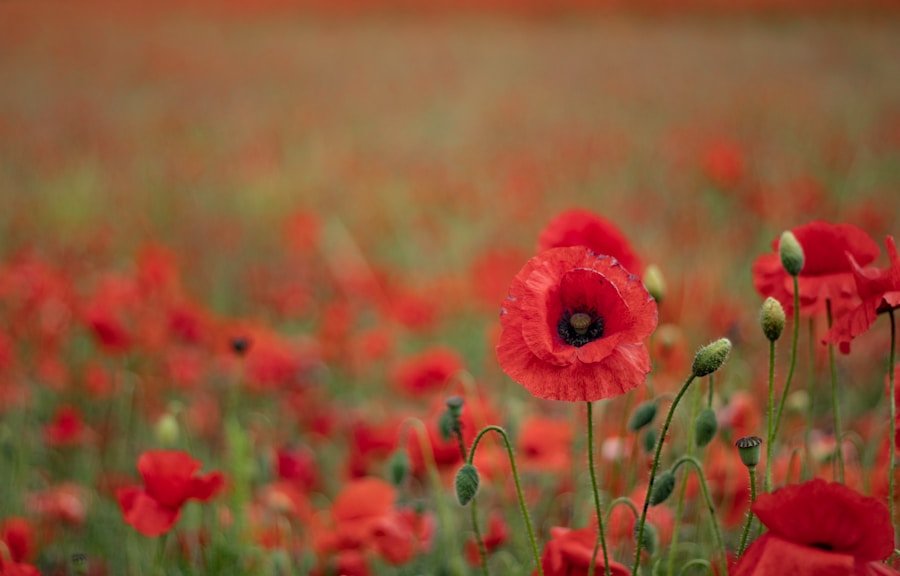

The poppy has a long and rich history as a symbol of remembrance. Its association with honoring the fallen soldiers dates back to the Napoleonic Wars in the 19th century, when the bright red flowers bloomed across the battlefields of Europe. The poem “In Flanders Fields” by Lieutenant Colonel John McCrae, written during World War I, further solidified the poppy’s significance as a symbol of remembrance. The poem describes the poppies growing amidst the graves of fallen soldiers, and it quickly became a powerful symbol of the sacrifices made by those who served in the war.
The tradition of wearing poppies to honor fallen soldiers was popularized by Moina Michael, an American professor and humanitarian, who was deeply moved by McCrae’s poem. She began selling silk poppies to raise funds for veterans and their families, and the practice quickly spread to other countries. Today, the poppy is worn by millions of people around the world as a symbol of remembrance and gratitude for the sacrifices made by those who served in the military.
The Significance of the Poppy in Different Cultures and Traditions
The poppy holds significant cultural and traditional importance in many different societies around the world. In Eastern cultures, the poppy is often associated with death and rebirth, and is used in funeral rites and ceremonies to honor the deceased. In China, the poppy symbolizes restful sleep and peaceful death, and is often used in funerary art and rituals.
In Western cultures, the poppy has become synonymous with remembrance and honoring the sacrifices of soldiers. In addition to its association with military service, the poppy is also seen as a symbol of hope and resilience. Its vibrant red color and delicate petals serve as a reminder of the beauty that can emerge from even the most challenging circumstances. The poppy has also been used in traditional medicine for centuries, with its seeds and petals being used to create herbal remedies for pain relief and relaxation.
The Poppy as a Symbol of Honor and Sacrifice in Military Contexts
In military contexts, the poppy is revered as a symbol of honor and sacrifice. Its association with fallen soldiers can be traced back to ancient Greek and Roman mythology, where the poppy was often linked to Morpheus, the god of dreams and sleep. In more recent history, the poppy has become a powerful emblem of the sacrifices made by those who served in the armed forces.
The red poppy is particularly significant in military contexts, as its vibrant color serves as a poignant reminder of the bloodshed and loss experienced during times of war. The act of wearing a poppy is seen as a gesture of respect and gratitude for those who have given their lives in service to their country. In many military ceremonies and memorials, poppies are laid at the gravesites of fallen soldiers as a symbol of remembrance and honor.
How the Poppy Became Associated with Veterans Day and Remembrance Day
The association between the poppy and Veterans Day (in the United States) and Remembrance Day (in Commonwealth countries) can be traced back to the aftermath of World War
The red poppies that bloomed across the battlefields of Europe inspired Lieutenant Colonel John McCrae to write his famous poem “In Flanders Fields,” which in turn led to the adoption of the poppy as a symbol of remembrance.
In 1921, the newly formed American Legion adopted the poppy as its official symbol of remembrance, and began selling artificial poppies to raise funds for veterans and their families. This practice quickly spread to other countries, and today, the poppy is worn by millions of people around the world on Veterans Day and Remembrance Day as a way to honor the sacrifices made by those who served in the military.
The Impact of the Poppy on Art, Literature, and Popular Culture
The poppy has had a profound impact on art, literature, and popular culture throughout history. In addition to inspiring John McCrae’s famous poem “In Flanders Fields,” the poppy has been featured in countless works of art and literature as a symbol of remembrance and sacrifice. Artists such as Georgia O’Keeffe and Vincent van Gogh have depicted the poppy in their paintings, capturing its vibrant colors and delicate beauty.
In literature, the poppy has been used as a powerful metaphor for loss, sacrifice, and resilience. It has been featured in numerous poems, novels, and plays as a symbol of remembrance for fallen soldiers and a reminder of the human cost of war. In popular culture, the poppy has been used in films, music, and fashion to convey themes of remembrance, honor, and hope.
The Role of the Poppy in Fundraising for Veterans and their Families
The poppy has played a crucial role in fundraising for veterans and their families since it was first adopted as a symbol of remembrance. In 1921, the American Legion began selling artificial poppies to raise funds for veterans in need, and this practice quickly spread to other organizations and countries. Today, millions of artificial poppies are sold each year on Veterans Day and Remembrance Day, with the proceeds going towards supporting veterans and their families.
The poppy has also been used as a symbol of solidarity and support for veterans in other fundraising efforts. In recent years, organizations such as the Royal British Legion have launched campaigns to encourage people to wear poppies as a way to show their support for veterans and raise awareness about their needs. The poppy has become a powerful tool for raising funds and advocating for better care and support for those who have served in the military.
The Future of the Poppy as a Symbol of Remembrance and Honor
As we look towards the future, it is clear that the poppy will continue to hold significant meaning as a symbol of remembrance and honor. Its vibrant red petals serve as a powerful reminder of the sacrifices made by those who served in the military, and its delicate beauty conveys a message of hope and resilience. The tradition of wearing poppies on Veterans Day and Remembrance Day is likely to endure for generations to come, as people around the world continue to honor the memory of fallen soldiers.
In addition to its traditional significance, the poppy is also likely to continue playing a crucial role in fundraising efforts for veterans and their families. As awareness about the needs of veterans grows, so too will the importance of using symbols such as the poppy to raise funds and advocate for better care and support for those who have served in the military. The future of the poppy as a symbol of remembrance and honor is bright, as it continues to inspire people around the world to remember and honor those who have made great sacrifices for their countries.