
Autumn leaf mulching is a natural and effective way to improve soil health and promote a healthy garden ecosystem. By mulching leaves, you can provide your soil with essential nutrients, improve its structure, and protect it from erosion. Additionally, leaf mulch can help to retain moisture in the soil, reducing the need for frequent watering. This can be especially beneficial in areas with limited water resources or during dry periods. Furthermore, as the leaves break down, they release organic matter into the soil, which can improve its fertility and support the growth of beneficial microorganisms. Overall, autumn leaf mulching is a sustainable and cost-effective way to enhance the health and productivity of your garden.
Autumn leaf mulching also has environmental benefits. By using leaves as mulch, you can reduce the amount of organic waste that ends up in landfills, where it would contribute to greenhouse gas emissions. Instead, by returning leaves to the soil, you can help to create a closed-loop system in which organic matter is recycled and reused within the garden ecosystem. This not only reduces the environmental impact of waste disposal but also contributes to the overall health of the soil and surrounding environment. In addition, by using natural materials like leaves for mulch, you can avoid the use of synthetic chemicals and fertilizers, promoting a more sustainable and eco-friendly approach to gardening.
How to Properly Mulch Leaves for Soil Health
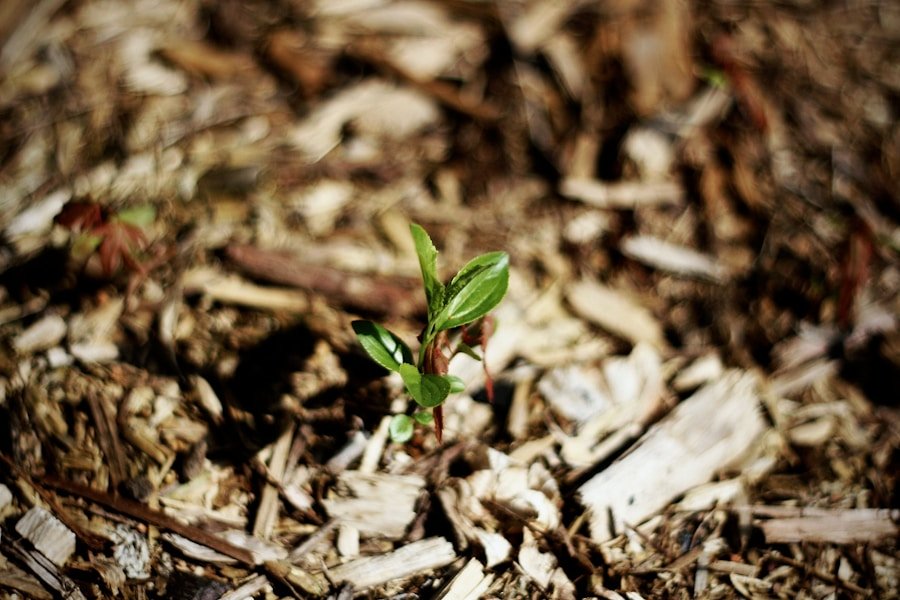
Properly mulching leaves is essential for maximizing their benefits for soil health. To begin, it’s important to shred or chop the leaves before applying them to the soil. This can be done using a lawn mower or leaf shredder, which will break the leaves down into smaller pieces that will decompose more quickly. Shredding the leaves also helps to prevent them from matting together and forming a barrier that can inhibit water and air from reaching the soil. Once the leaves are shredded, they can be spread evenly over the soil surface to a depth of 2-3 inches. It’s important to avoid piling the leaves too thickly, as this can create an environment that is too wet and can lead to anaerobic conditions that are detrimental to soil health.
In addition to shredding and spreading the leaves, it’s important to monitor their decomposition over time. As the leaves break down, they will need to be replenished periodically to maintain an adequate layer of mulch. This can be done by adding more shredded leaves as needed throughout the autumn and winter months. It’s also important to avoid compacting the leaves or disturbing them excessively, as this can disrupt the decomposition process and inhibit the benefits of mulching. By following these proper mulching techniques, you can ensure that your leaves contribute to improved soil health and a thriving garden ecosystem.
The Impact of Leaf Mulching on Soil Microorganisms
Leaf mulching has a significant impact on soil microorganisms, which play a crucial role in maintaining soil health and fertility. As leaves decompose, they release organic matter into the soil, providing a food source for microorganisms such as bacteria, fungi, and earthworms. These microorganisms break down the organic matter further, releasing nutrients that are essential for plant growth and overall soil health. In addition, the presence of organic matter in the soil can help to create a favorable environment for beneficial microorganisms, which can outcompete harmful pathogens and contribute to disease suppression in the garden.
Furthermore, leaf mulching can help to improve soil structure, creating a more hospitable environment for microorganisms. As leaves decompose, they contribute to the formation of stable aggregates in the soil, which provide pore spaces for air and water movement. This allows for better aeration and drainage in the soil, which are essential for supporting a diverse and healthy population of microorganisms. Overall, by promoting the growth and activity of beneficial microorganisms, leaf mulching can contribute to improved soil fertility, disease resistance, and overall garden productivity.
Choosing the Right Leaves for Mulching
When choosing leaves for mulching, it’s important to consider their composition and potential impact on soil health. Ideally, you should select leaves that are high in nutrients and low in tannins, which can inhibit decomposition and affect soil pH. Leaves from trees such as maple, ash, and fruit trees are good choices for mulching, as they are relatively high in nutrients and break down easily. On the other hand, leaves from trees such as oak and beech are higher in tannins and may take longer to decompose, so they may not be as suitable for mulching.
It’s also important to avoid using leaves that have been treated with pesticides or herbicides, as these chemicals can have negative effects on soil microorganisms and overall soil health. Additionally, leaves that have been contaminated with mold or disease should be avoided, as they can introduce harmful pathogens into the garden ecosystem. By choosing the right leaves for mulching, you can ensure that you are providing your soil with high-quality organic matter that will contribute to improved fertility and overall garden health.
Tips for Incorporating Leaf Mulch into Your Garden
Incorporating leaf mulch into your garden is a simple and effective way to improve soil health and promote a thriving garden ecosystem. One of the best ways to use leaf mulch is as a top dressing around plants and trees. By spreading a layer of shredded leaves around the base of plants, you can provide them with essential nutrients and protect their roots from temperature fluctuations and moisture loss. Additionally, as the leaves decompose, they will release organic matter into the soil, contributing to improved fertility and overall plant health.
Another effective way to incorporate leaf mulch into your garden is by using it as a component of compost. By mixing shredded leaves with other organic materials such as kitchen scraps and grass clippings, you can create a nutrient-rich compost that can be used to enrich garden beds and promote healthy plant growth. Additionally, by adding leaf mulch to compost piles, you can help to balance their carbon-to-nitrogen ratio, promoting faster decomposition and creating a more balanced and fertile end product. Overall, by incorporating leaf mulch into your garden through top dressing and composting, you can promote improved soil health and support a thriving garden ecosystem.
Common Misconceptions About Leaf Mulching
There are several common misconceptions about leaf mulching that may prevent gardeners from taking advantage of its benefits for soil health. One common misconception is that leaf mulch will smother plants or create an environment that is too wet for healthy growth. In reality, when applied properly, leaf mulch provides a protective layer that helps to retain moisture in the soil while allowing air and water to penetrate. Additionally, by promoting improved soil structure and fertility, leaf mulch can actually support healthier plant growth and overall garden productivity.
Another common misconception is that leaf mulch will attract pests or contribute to disease in the garden. While it’s true that some pests may be attracted to decaying organic matter, proper mulching techniques can help to minimize this risk. By shredding leaves before applying them to the soil and avoiding excessive thicknesses of mulch, you can create an environment that is less hospitable to pests and pathogens. Additionally, by promoting improved soil health through leaf mulching, you can create a more resilient garden ecosystem that is better able to resist disease and pest pressure. Overall, by dispelling these common misconceptions about leaf mulching, gardeners can take advantage of its many benefits for soil health and overall garden productivity.
The Long-Term Effects of Leaf Mulching on Soil Health
The long-term effects of leaf mulching on soil health are significant and far-reaching. Over time, as leaves decompose and release organic matter into the soil, they contribute to improved fertility and structure. This organic matter provides essential nutrients for plant growth and supports a diverse population of beneficial microorganisms that are essential for maintaining healthy soil ecosystems. Additionally, as leaves break down, they contribute to the formation of stable aggregates in the soil, which provide pore spaces for air and water movement. This improves soil structure and promotes better aeration and drainage, creating an environment that is more hospitable for plant roots and beneficial microorganisms.
Furthermore, by promoting improved soil health through leaf mulching, gardeners can create a more resilient garden ecosystem that is better able to withstand environmental stressors such as drought or extreme temperatures. Healthy soils with high levels of organic matter are better able to retain moisture during dry periods and provide plants with essential nutrients for growth. Additionally, by supporting a diverse population of beneficial microorganisms, healthy soils are better able to resist disease pressure and support overall plant health. Overall, by promoting long-term improvements in soil health through leaf mulching, gardeners can create sustainable and productive garden ecosystems that will thrive for years to come.
In conclusion, autumn leaf mulching is a natural and effective way to improve soil health and promote a healthy garden ecosystem. By properly mulching leaves, gardeners can provide their soil with essential nutrients, improve its structure, and protect it from erosion. Additionally, leaf mulch can help to retain moisture in the soil, reducing the need for frequent watering. The impact of leaf mulching on soil microorganisms is significant; as leaves decompose, they release organic matter into the soil, providing a food source for microorganisms such as bacteria, fungi, and earthworms. Choosing the right leaves for mulching is essential; selecting leaves that are high in nutrients and low in tannins will ensure that you are providing your soil with high-quality organic matter that will contribute to improved fertility and overall garden health.
Incorporating leaf mulch into your garden is simple; using it as a top dressing around plants or incorporating it into compost are effective ways to improve soil health and promote a thriving garden ecosystem. Common misconceptions about leaf mulching should not deter gardeners from taking advantage of its benefits; when applied properly, leaf mulch provides a protective layer that helps to retain moisture in the soil while allowing air and water to penetrate. The long-term effects of leaf mulching on soil health are significant; over time, as leaves decompose and release organic matter into the soil, they contribute to improved fertility and structure. By promoting long-term improvements in soil health through leaf mulching, gardeners can create sustainable and productive garden ecosystems that will thrive for years to come.