
Anzac Day is a national day of remembrance in Australia and New Zealand that commemorates the members of the Australian and New Zealand Army Corps (ANZAC) who fought at Gallipoli in Turkey during World War
The day is observed on April 25th each year, the anniversary of the landing of ANZAC troops at Gallipoli in 1915. Anzac Day has since evolved to honor all Australians and New Zealanders who have served and died in war and on peacekeeping missions. One of the most enduring traditions of Anzac Day is the laying of commemorative flowers, particularly rosemary and poppies, at war memorials and on the graves of fallen soldiers.
The tradition of laying flowers on Anzac Day has its roots in the aftermath of World War I, when people began to honor the fallen by placing wreaths and flowers at war memorials and gravesites. Over time, specific flowers became associated with Anzac Day, each carrying its own symbolism and significance. These flowers have become an integral part of Anzac Day commemorations, serving as a poignant reminder of the sacrifices made by the Anzacs and all those who have served in the armed forces.
The Symbolism of Rosemary: Remembrance, Loyalty, and Hope
Rosemary has long been associated with remembrance and is a symbol of loyalty and hope. In the context of Anzac Day, rosemary is often worn as a mark of respect for those who have served in the military and as a way to honor the memory of the fallen. The association of rosemary with remembrance dates back to ancient times, when it was believed to improve memory and was often used at funerals as a symbol of remembrance and fidelity.
On Anzac Day, rosemary is worn as a sprig or incorporated into wreaths and bouquets as a way to pay tribute to the Anzacs and to show gratitude for their service and sacrifice. The fragrant herb is also seen as a symbol of hope, representing the enduring spirit of those who have served in the armed forces. By wearing or laying rosemary on Anzac Day, people are not only honoring the memory of the fallen but also expressing their loyalty to those who have served their country.
The Meaning of Poppies: Sacrifice, Resilience, and Remembering the Fallen
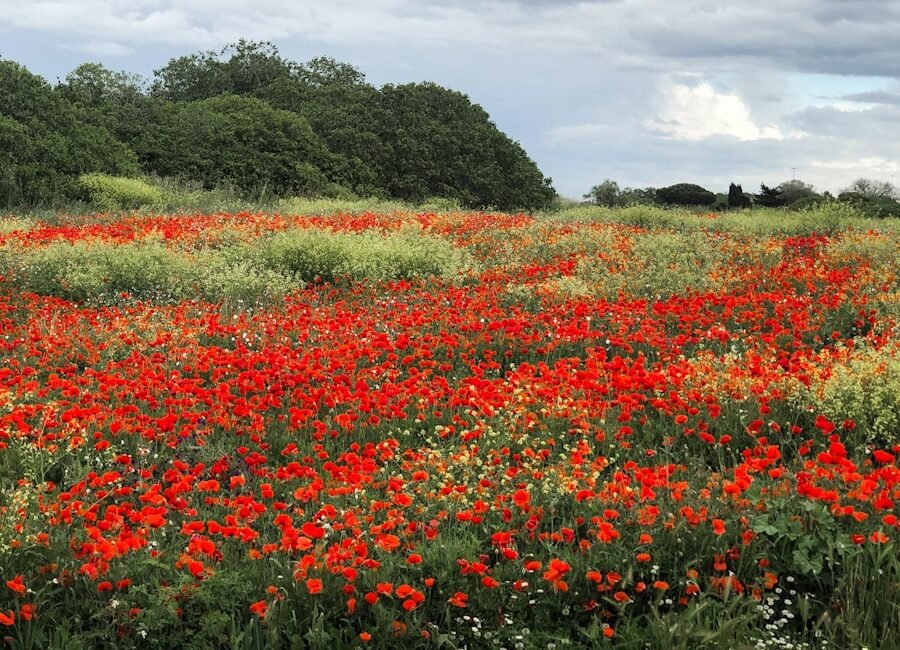
Poppies have long been associated with remembrance and are a symbol of sacrifice, resilience, and remembering the fallen. The tradition of wearing poppies to honor fallen soldiers dates back to the aftermath of World War I, when they were among the first plants to bloom in the devastated battlefields of Flanders. The sight of these bright red flowers inspired Lieutenant Colonel John McCrae to write his famous poem “In Flanders Fields,” which immortalized the poppy as a symbol of remembrance.
On Anzac Day, poppies are worn as a way to honor the sacrifices made by the Anzacs and all those who have served in the armed forces. The red poppy has come to symbolize the blood shed by soldiers in war, while its ability to thrive in harsh conditions represents the resilience and courage of those who have served. By wearing poppies on Anzac Day, people are not only paying tribute to the fallen but also acknowledging their enduring legacy and the sacrifices they made for their country.
How Anzac Day Flowers Honor the Legacy of the Anzacs
Anzac Day flowers play a crucial role in honoring the legacy of the Anzacs and all those who have served in the armed forces. The act of laying flowers at war memorials and on gravesites is a deeply symbolic gesture that serves as a tangible expression of gratitude and remembrance. By laying flowers on Anzac Day, people are paying tribute to the sacrifices made by the Anzacs and acknowledging their enduring legacy.
The choice of specific flowers, such as rosemary and poppies, further enhances the significance of this tradition. Each flower carries its own symbolism and meaning, adding depth and poignancy to the act of commemoration. By incorporating these symbolic flowers into wreaths and bouquets, people are able to convey their respect for the fallen and their appreciation for the service and sacrifice of those who have served in the armed forces.
The Cultural Significance of Rosemary and Poppies in Anzac Day Commemorations
The cultural significance of rosemary and poppies in Anzac Day commemorations cannot be overstated. These flowers have become deeply ingrained in the tradition of honoring the Anzacs and all those who have served in the armed forces. Their symbolism and meaning serve as a powerful reminder of the sacrifices made by soldiers in times of war and conflict.
Rosemary and poppies are not only symbols of remembrance but also represent hope, resilience, and sacrifice. Their cultural significance lies in their ability to evoke powerful emotions and convey profound messages of gratitude and respect. By incorporating these flowers into Anzac Day commemorations, people are able to connect with the legacy of the Anzacs on a deeper level, ensuring that their sacrifices are never forgotten.
The Role of Flowers in Paying Tribute to the Anzacs and Veterans
Flowers play a crucial role in paying tribute to the Anzacs and veterans on Anzac Day. The act of laying flowers at war memorials and on gravesites is a tangible expression of gratitude and remembrance that allows people to honor the sacrifices made by those who have served in the armed forces. Flowers serve as a poignant reminder of the enduring legacy of the Anzacs and all those who have served their country.
The choice of specific flowers, such as rosemary and poppies, further enhances the role of flowers in paying tribute on Anzac Day. These symbolic flowers carry deep meaning and serve as a powerful way to convey respect for the fallen and appreciation for the service and sacrifice of veterans. By incorporating these flowers into wreaths and bouquets, people are able to express their gratitude for the sacrifices made by soldiers in times of war and conflict.
The Importance of Understanding the Symbolism of Anzac Day Flowers in Commemorating the Anzacs’ Sacrifice
Understanding the symbolism of Anzac Day flowers is crucial in commemorating the sacrifice made by the Anzacs. These flowers carry deep meaning and serve as powerful symbols of remembrance, loyalty, hope, sacrifice, resilience, and honoring the fallen. By understanding the significance of these flowers, people are able to connect with the legacy of the Anzacs on a deeper level, ensuring that their sacrifices are never forgotten.
The act of laying flowers at war memorials and on gravesites is a tangible expression of gratitude and remembrance that allows people to pay tribute to the sacrifices made by those who have served in the armed forces. By incorporating specific flowers such as rosemary and poppies into commemorations, people are able to convey their respect for the fallen and their appreciation for the service and sacrifice of veterans. Understanding the symbolism of these flowers ensures that Anzac Day remains a meaningful day of remembrance for generations to come.