
Australian irises are a stunning and diverse group of plants that are native to Australia. These beautiful flowers are known for their vibrant colors and unique shapes, making them a popular choice for gardens and landscapes. Australian irises belong to the genus Iris, which is a large and diverse group of flowering plants that are found all over the world. However, the Australian species of irises are particularly special because they have adapted to the unique climate and soil conditions of the Australian continent.
Australian irises are a favorite among gardeners and plant enthusiasts because of their striking beauty and easy care. They are also an important part of the ecosystem, providing food and habitat for a variety of wildlife. In this article, we will explore the different varieties of Australian irises, when and where to spot them, tips for identifying them, how to care for them, their role in the ecosystem, and conservation efforts to protect them.
The Different Varieties of Australian Irises
There are several different species of Australian irises, each with its own unique characteristics and growing requirements. Some of the most popular varieties include the Yellow Flag Iris (Iris pseudacorus), the Blue Flag Iris (Iris versicolor), and the Siberian Iris (Iris sibirica). These irises come in a wide range of colors, including shades of blue, purple, yellow, and white, and they can be found growing in a variety of habitats, from wetlands and marshes to woodlands and grasslands.
The Yellow Flag Iris is known for its bright yellow flowers and tall, sword-shaped leaves. It is commonly found growing along the edges of ponds, lakes, and streams, where it adds a splash of color to the landscape. The Blue Flag Iris, on the other hand, has striking blue or purple flowers and thrives in wetland areas with moist soil. The Siberian Iris is a hardy and adaptable species that can be found in a wide range of habitats, from damp meadows to dry woodlands. These are just a few examples of the many different varieties of Australian irises, each with its own unique beauty and growing requirements.
When and Where to Spot Australian Irises
Australian irises can be found growing in a wide range of habitats across the continent, from coastal regions to mountainous areas. They are particularly common in wetland areas such as marshes, swamps, and riverbanks, where they thrive in moist soil and full sun. However, they can also be found in drier habitats such as grasslands, woodlands, and even deserts.
The best time to spot Australian irises in bloom is during the spring and summer months, when they produce their stunning flowers. Depending on the species, some irises may bloom earlier in the spring, while others may continue to bloom into the summer months. If you’re looking to spot Australian irises in the wild, keep an eye out for wetland areas with plenty of sunlight and moist soil. You may also find them growing along the edges of ponds, lakes, and streams, or in open meadows and grasslands.
Tips for Identifying Australian Irises
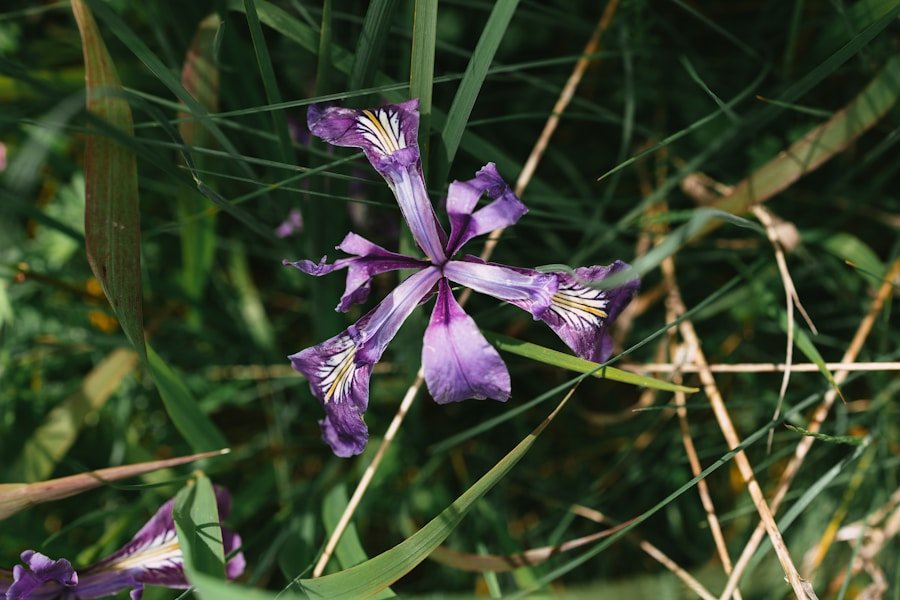
Identifying Australian irises can be a fun and rewarding experience, especially for those who appreciate the beauty of these unique plants. One of the key characteristics of Australian irises is their distinctive flowers, which come in a wide range of colors and shapes. Most Australian irises have six petals arranged in a symmetrical pattern, with three petals pointing upwards and three pointing downwards. The flowers are often large and showy, making them easy to spot from a distance.
In addition to their flowers, Australian irises can also be identified by their long, sword-shaped leaves and their preference for moist soil and full sun. Some species may also have specific habitat requirements, such as wetland areas or grasslands. When trying to identify Australian irises in the wild, it’s important to pay attention to these key characteristics and to consult a field guide or plant identification resource for help.
How to Care for Australian Irises
Australian irises are relatively easy to care for and can make a beautiful addition to any garden or landscape. When planting Australian irises in your garden, it’s important to choose a location with well-drained soil and plenty of sunlight. These plants prefer moist soil but can tolerate periods of drought once established. They also benefit from regular watering during dry periods and a layer of mulch to help retain moisture.
Australian irises can be propagated by division or by seed, making them easy to propagate and share with friends and fellow gardeners. When dividing irises, it’s best to do so in the fall or early spring, when the plants are not actively growing. This will give them time to establish themselves before the next growing season. In terms of pests and diseases, Australian irises are relatively resistant but may be susceptible to iris borer and fungal diseases in certain conditions.
The Role of Australian Irises in the Ecosystem
Australian irises play an important role in the ecosystem by providing food and habitat for a variety of wildlife. Their vibrant flowers attract pollinators such as bees, butterflies, and hummingbirds, which help to ensure the continued reproduction of these plants. In addition to providing food for pollinators, Australian irises also provide shelter for small animals such as frogs, turtles, and birds.
In wetland areas, Australian irises help to stabilize the soil and prevent erosion, while also providing valuable habitat for aquatic wildlife such as fish and amphibians. Their long roots help to filter water and remove excess nutrients, making them an important part of the ecosystem in these sensitive habitats. In grasslands and woodlands, Australian irises provide valuable food and shelter for a variety of insects and small mammals, contributing to the overall biodiversity of these ecosystems.
Conservation Efforts for Australian Irises
Despite their importance in the ecosystem, many species of Australian irises are facing threats from habitat loss, invasive species, climate change, and other human activities. As a result, conservation efforts are underway to protect these beautiful plants and ensure their continued survival in the wild. One important aspect of conservation is the protection of wetland habitats where many species of Australian irises are found.
Conservation organizations are working to restore and protect wetland areas through habitat restoration projects, invasive species control, and public education efforts. In addition to protecting their natural habitats, efforts are also being made to propagate and reintroduce rare or endangered species of Australian irises into suitable habitats where they have been lost or depleted. By raising awareness about the importance of these plants and their habitats, conservationists hope to ensure that future generations will be able to enjoy the beauty of Australian irises in the wild.
In conclusion, Australian irises are a beautiful and important part of the Australian landscape, providing food and habitat for a variety of wildlife while adding color and beauty to our natural surroundings. By learning more about these unique plants and taking steps to protect their habitats, we can ensure that they will continue to thrive for generations to come. Whether you’re a gardener looking to add some color to your landscape or a nature enthusiast interested in learning more about native plants, Australian irises are definitely worth exploring further.