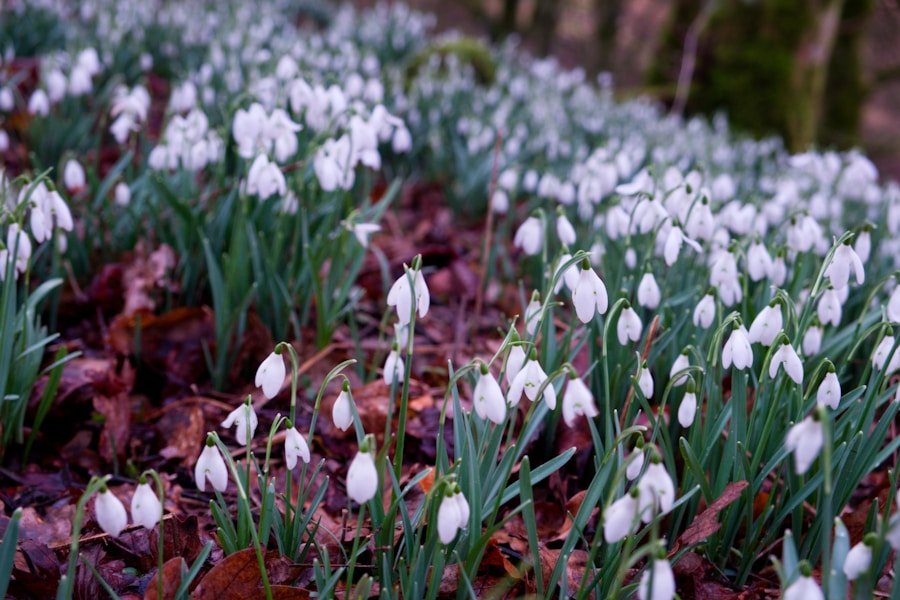

Snowdrops are a symbol of hope and rebirth. Their delicate white petals and green leaves emerge from the cold, dark earth in late winter, signaling the end of the long, harsh winter and the beginning of spring. In many cultures, snowdrops are seen as a sign of purity and innocence, and are often associated with the Virgin Mary in Christian traditions. The flower’s ability to thrive in cold climates also symbolizes resilience and strength in the face of adversity. In literature and art, snowdrops are often used to represent new beginnings and the promise of better days ahead. Their appearance is a reminder that even in the darkest of times, there is always hope for renewal and growth.
Snowdrops are also associated with the idea of remembrance and honoring loved ones who have passed away. In some cultures, they are planted in cemeteries as a symbol of remembrance and to bring comfort to those who are grieving. The flower’s ability to bloom in the cold, barren winter landscape serves as a reminder that life continues on, even in the face of loss and sorrow. Overall, snowdrops hold a deep symbolic meaning that transcends cultural boundaries and resonates with people around the world.
The History of Snowdrops
Snowdrops have a long and rich history that dates back to ancient times. They are native to Europe and Asia, and have been cultivated for centuries for their beauty and resilience. The earliest recorded mention of snowdrops dates back to the 4th century, when they were mentioned by the Greek poet Theocritus. In medieval Europe, snowdrops were often associated with purity and were used in religious ceremonies and artwork. They were also believed to have medicinal properties and were used to treat various ailments.
In the 19th century, snowdrops gained popularity as a garden plant in Europe and North America. They were prized for their ability to bloom early in the year, often before the last snow had melted. Snowdrops were also a favorite subject of Victorian poets and artists, who were drawn to their delicate beauty and symbolic meaning. Today, snowdrops are still highly prized by gardeners and are often sought after for their early bloom and ability to thrive in cool climates. Their long history and enduring popularity make them a beloved symbol of hope and renewal.
The Importance of Snowdrops in Cool Climates
Snowdrops play a crucial role in cool climates, where they are often the first flowers to bloom after a long, cold winter. Their early emergence brings much-needed color and life to the barren landscape, signaling the arrival of spring and warmer days ahead. In addition to their aesthetic value, snowdrops also provide important nectar for early-emerging pollinators such as bees and butterflies. This makes them an essential part of the ecosystem in cool climates, where pollinators may struggle to find food sources during the early spring months.
Furthermore, snowdrops are an important indicator of soil health in cool climates. Their ability to thrive in cold, damp conditions suggests that the soil is well-drained and fertile, making them an ideal plant for gardeners looking to improve their soil quality. Snowdrops also help to prevent erosion by stabilizing the soil with their dense root systems. Overall, snowdrops play a vital role in cool climates by providing early nectar for pollinators, improving soil health, and bringing much-needed beauty to the landscape after a long winter.
Tips for Growing Snowdrops in Cool Climates
Growing snowdrops in cool climates requires some special care and attention to ensure their success. When planting snowdrops, it is important to choose a location with well-drained soil that receives plenty of sunlight in the early spring. Snowdrops prefer moist, fertile soil, so adding organic matter such as compost or leaf mulch can help improve soil quality and drainage. Planting snowdrops in clusters or drifts will create a more natural look and provide a greater impact when they bloom.
Snowdrops should be planted in the fall, ideally between September and November, to allow them to establish their root systems before the ground freezes. When planting snowdrops, it is important to place them at a depth of 3-4 inches and space them about 3-4 inches apart to allow for proper air circulation. After planting, water the bulbs thoroughly to help them settle into the soil. Once established, snowdrops require minimal maintenance and will naturalize over time, creating a beautiful carpet of white flowers in early spring.
Choosing the Right Location for Snowdrops
Choosing the right location for snowdrops is crucial for their success in cool climates. Snowdrops prefer well-drained soil that is rich in organic matter and receives plenty of sunlight in the early spring. They can tolerate partial shade, but will not bloom as profusely as they would in full sun. When selecting a location for snowdrops, it is important to consider their natural habitat, which is often found in woodland areas with dappled sunlight and moist soil.
In addition to soil and sunlight requirements, it is important to consider the overall aesthetic of the location when planting snowdrops. Snowdrops look best when planted in clusters or drifts rather than single bulbs scattered throughout the garden. Planting them near other early-blooming bulbs such as crocuses or daffodils can create a stunning display of color and provide food for pollinators during the early spring months. Overall, choosing the right location for snowdrops is essential for their success in cool climates and will ensure a beautiful display of flowers year after year.
Caring for Snowdrops in Cool Climates
Caring for snowdrops in cool climates is relatively simple once they are established. After planting, water the bulbs thoroughly to help them settle into the soil. Once they have finished blooming, allow the foliage to die back naturally before removing it. This allows the bulbs to store energy for next year’s growth. It is important not to cut back or mow over the foliage while it is still green, as this can weaken the bulbs and reduce their ability to bloom in future years.
In late summer or early fall, it may be necessary to divide overcrowded clumps of snowdrops to prevent them from becoming too congested. This can be done by carefully digging up the bulbs and separating them into smaller clumps before replanting them at the appropriate depth. Dividing snowdrops every few years will help maintain their vigor and ensure a healthy display of flowers each spring. Overall, caring for snowdrops in cool climates is relatively low-maintenance once they are established, making them an ideal choice for gardeners looking to add early spring color to their landscape.
The Future of Snowdrops in Cool Climates
The future of snowdrops in cool climates looks bright as more gardeners recognize their value as an early-blooming bulb that thrives in cold conditions. With increasing interest in native plants and pollinator-friendly gardens, snowdrops are becoming a popular choice for gardeners looking to add early spring color to their landscape while supporting local ecosystems. As awareness grows about the importance of early-blooming plants for pollinators, snowdrops are likely to become even more sought after for their ability to provide nectar during the early spring months.
In addition to their ecological value, snowdrops are also prized for their symbolic meaning and aesthetic beauty, making them a beloved plant for gardeners around the world. As interest in gardening continues to grow, it is likely that more people will discover the joy of growing snowdrops in their own gardens, further increasing their popularity in cool climates. Overall, the future of snowdrops looks promising as more people recognize their value as an early-blooming bulb that brings hope and beauty to the landscape after a long winter.