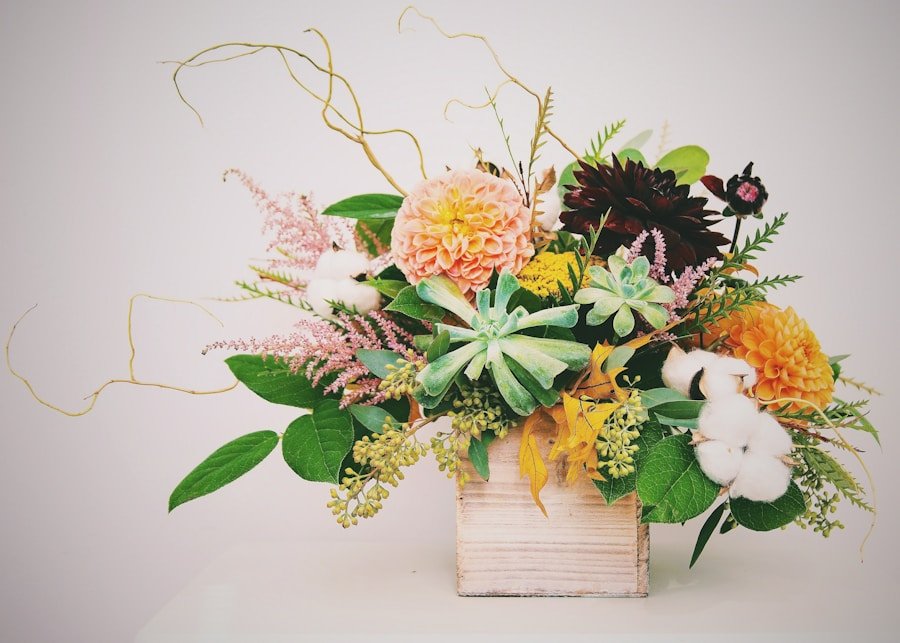

The language of flowers, also known as floriography, has been used as a form of communication for centuries. The practice of assigning meanings to different flowers dates back to ancient civilizations such as the Greeks, Romans, and Egyptians. In the 18th century, the language of flowers became popular in Europe, particularly in England and France. During this time, floral dictionaries were published, detailing the meanings associated with various flowers and plants. This allowed people to convey messages and emotions through the giving and receiving of specific blooms. The language of flowers reached its peak in the Victorian era, where it was used as a way to express feelings that could not be spoken aloud. Each flower was assigned a specific meaning, allowing individuals to communicate their sentiments through carefully chosen bouquets. Today, the language of flowers continues to be used as a means of expression and symbolism, with each flower carrying its own unique significance.
The language of flowers has evolved over time, with different cultures and societies attributing their own meanings to various blooms. In some cultures, certain flowers are considered sacred and are used in religious ceremonies and rituals. In others, flowers are used to convey specific messages or emotions in everyday life. The language of flowers has played a significant role in human communication and expression throughout history, and its influence can still be seen in modern society.
Floral Symbolism in Eastern Cultures
In Eastern cultures, flowers have long been revered for their beauty and symbolism. In China, for example, the peony is considered the “king of flowers” and is a symbol of wealth, prosperity, and honor. The lotus flower holds great significance in Buddhism, representing purity and enlightenment. In Japan, the cherry blossom is a symbol of the transient nature of life and is celebrated during the annual hanami festival. In India, the marigold is used in religious ceremonies and is associated with the Hindu goddess of wealth, Lakshmi. Throughout Eastern cultures, flowers are used to convey deep spiritual and cultural meanings, often playing a central role in traditional customs and rituals.
Floral symbolism in Eastern cultures extends beyond religious and spiritual contexts, with flowers also being used to convey emotions and sentiments. In Japan, the giving of flowers is a common practice to express gratitude, love, or condolences. In China, certain flowers are associated with specific meanings and are often given as gifts to convey well-wishes or good fortune. The use of flowers in Eastern cultures reflects a deep appreciation for nature and its ability to convey profound meanings and emotions.
The Role of Flowers in Western Traditions
In Western traditions, flowers have long been used to mark significant occasions and events. From weddings to funerals, flowers play a central role in Western cultural practices. In ancient Greece and Rome, flowers were used in religious ceremonies and as offerings to the gods. In medieval Europe, flowers were used to decorate homes and churches during festivals and celebrations. During the Renaissance, floral arrangements became more elaborate and were used as a form of artistic expression. In modern times, flowers continue to be an integral part of Western traditions, with specific blooms being associated with different events and emotions.
In Western cultures, flowers are often used to celebrate joyous occasions such as weddings, birthdays, and anniversaries. Roses are commonly given as a symbol of love and affection, while lilies are often used at funerals to symbolize purity and rebirth. Flowers are also used to decorate homes and public spaces during holidays such as Christmas and Easter. The use of flowers in Western traditions reflects a deep appreciation for nature’s beauty and its ability to enhance special moments and celebrations.
Flowers as Symbols of Love and Romance
Flowers have long been associated with love and romance, with specific blooms carrying their own unique meanings and symbolism. Roses are perhaps the most well-known symbol of love, with red roses representing passion and desire. White roses symbolize purity and innocence, while pink roses convey admiration and gratitude. In addition to roses, other flowers such as tulips, daisies, and orchids are also commonly associated with love and romance. The giving of flowers as a token of affection has been a tradition for centuries, with individuals using blooms to express their feelings towards loved ones.
The use of flowers as symbols of love and romance is not limited to romantic relationships, but extends to familial and platonic connections as well. In many cultures, the giving of flowers is a common way to express love and appreciation for family members and friends. Whether it’s a bouquet of red roses on Valentine’s Day or a simple daisy given as a gesture of friendship, flowers continue to be a powerful symbol of love and affection in modern society.
The Use of Flowers in Religious and Spiritual Practices
Flowers have long held significance in religious and spiritual practices around the world. In Hinduism, flowers are used as offerings to deities during puja ceremonies. In Buddhism, lotus flowers are often depicted in religious art as a symbol of purity and enlightenment. In Christianity, flowers are used to decorate churches during religious holidays such as Easter and Christmas. The use of flowers in religious and spiritual practices serves as a way to honor the divine and convey reverence for the natural world.
In addition to their use in religious ceremonies, flowers also hold symbolic meanings in spiritual practices such as meditation and healing rituals. In many cultures, specific flowers are believed to possess healing properties and are used in traditional medicine practices. The use of flowers in religious and spiritual contexts reflects a deep connection between nature and the divine, with blooms serving as a bridge between the physical and spiritual realms.
Flowers as Symbols of Mourning and Remembrance
Flowers have long been used as symbols of mourning and remembrance in cultures around the world. In Western traditions, lilies are often associated with funerals and are used to symbolize the purity and innocence of the departed soul. In Eastern cultures such as Japan, white chrysanthemums are commonly used at funerals as a symbol of grief and mourning. The giving of sympathy flowers is a common practice in many cultures, with individuals using blooms to express their condolences to those who have experienced loss.
In addition to their use at funerals, flowers are also used to mark anniversaries or special days of remembrance for loved ones who have passed away. In Mexico, the Day of the Dead is celebrated with vibrant floral displays at cemeteries to honor deceased relatives. The use of flowers as symbols of mourning and remembrance serves as a way for individuals to express their grief and pay tribute to those who have passed on.
The Modern Interpretation of Flower Symbolism
In modern society, the language of flowers continues to be used as a means of expression and symbolism. While traditional meanings associated with specific blooms still hold significance, individuals also assign their own personal meanings to different flowers based on their experiences and emotions. The giving of flowers remains a common practice for special occasions such as birthdays, anniversaries, and holidays. Additionally, floral arrangements are often used as decorative elements in homes and public spaces to enhance aesthetic appeal.
The use of flowers in art, fashion, and interior design reflects a continued appreciation for their beauty and symbolism in modern society. Floral patterns are commonly used in textiles and fashion accessories, while floral motifs are prevalent in contemporary art and design. The language of flowers has also found its way into popular culture through literature, music, and film, with references to specific blooms carrying symbolic meanings.
In conclusion, the language of flowers has played a significant role in human communication and expression throughout history. From ancient civilizations to modern society, flowers have been used to convey emotions, mark significant events, honor the divine, express love and affection, mourn the departed, and enhance aesthetic beauty. The symbolism associated with different blooms continues to evolve over time, reflecting the ever-changing nature of human experience and emotion. Whether it’s a single rose given as a token of love or an elaborate floral arrangement used to mark a special occasion, the language of flowers remains a powerful form of expression that transcends cultural boundaries and connects individuals through shared meanings and emotions.

Other Articles