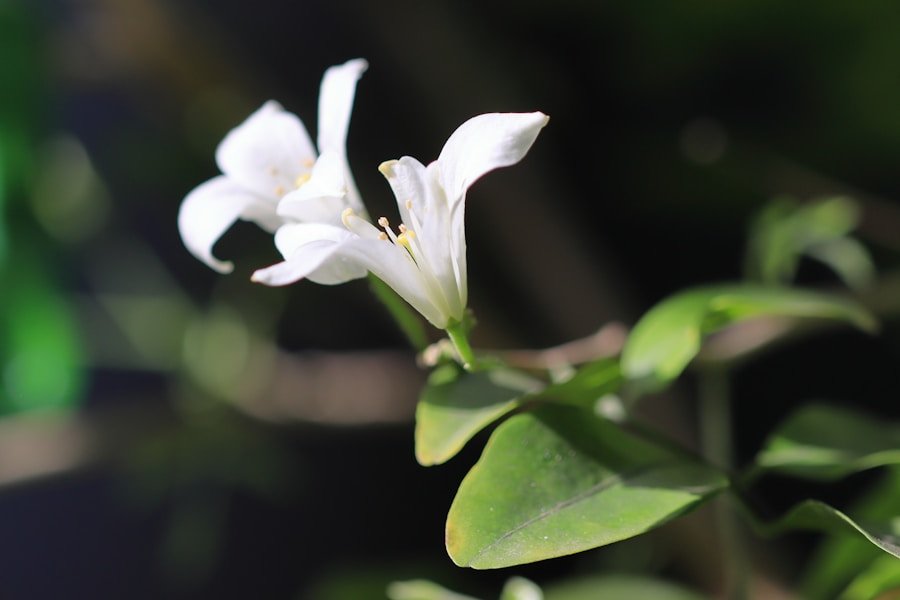

Jasmine, known for its delicate white flowers and intoxicating fragrance, has a rich history that dates back thousands of years. The plant is native to the Himalayas, China, and northern India, and has been cultivated for its aromatic properties since ancient times. The name “jasmine” is derived from the Persian word “yasmin,” which means “gift from God.” In ancient Persia, jasmine was used in religious ceremonies and as a symbol of love and beauty. The plant was later introduced to Europe by the Moors in the 8th century, where it became popular in gardens and as a fragrance for perfumes and cosmetics.
Jasmine has also played a significant role in various cultures and traditions throughout history. In India, jasmine is known as the “queen of flowers” and is used in religious ceremonies, weddings, and festivals. In China, jasmine has been used for its medicinal properties and as a symbol of purity and grace. The plant has also been revered in Greek and Roman mythology, where it was associated with love, fertility, and beauty. Today, jasmine continues to be a beloved flower in many parts of the world, and its timeless appeal has made it a popular ingredient in perfumery, aromatherapy, and traditional medicine.
The Cultural Significance of Jasmine
Jasmine holds a special place in the hearts of many cultures around the world, where it is revered for its beauty, fragrance, and symbolic meanings. In India, jasmine is considered a sacred flower and is often used in religious ceremonies, weddings, and festivals. The flower is also a popular adornment for women’s hair and is worn as a symbol of purity and grace. In China, jasmine has been used for centuries in traditional medicine to treat various ailments, such as headaches, insomnia, and anxiety. The plant is also associated with the concept of yin and yang, representing balance and harmony.
In the Middle East, jasmine has been a symbol of love and sensuality for centuries. The flower is often used in perfumes, oils, and incense to create an alluring and romantic atmosphere. In Greece and Rome, jasmine was associated with love, fertility, and beauty, and was often used in religious ceremonies and as a fragrance for cosmetics. Today, jasmine continues to be a beloved flower in many parts of the world, where it is used in perfumery, aromatherapy, and traditional medicine. Its timeless appeal and cultural significance have made it a symbol of love, beauty, and spirituality across different cultures.
The Science Behind Jasmine’s Aroma
The intoxicating aroma of jasmine is due to the presence of various chemical compounds in its flowers. The primary scent molecules in jasmine are benzyl acetate, linalool, indole, and jasmone, which give the flower its sweet, floral, and slightly fruity fragrance. These compounds are released from the flowers’ petals through a process called volatilization, where they evaporate into the air and are perceived by the olfactory receptors in the nose.
The scent of jasmine has been scientifically proven to have mood-enhancing properties, as it can help reduce stress, anxiety, and depression. Studies have shown that inhaling the aroma of jasmine can increase the production of serotonin in the brain, which is known as the “feel-good” hormone. This can lead to feelings of relaxation, happiness, and overall well-being. The fragrance of jasmine has also been found to have aphrodisiac effects, as it can stimulate feelings of sensuality and arousal. These scientific findings have contributed to the widespread use of jasmine in aromatherapy, perfumery, and holistic healing practices.
The Versatility of Jasmine in Perfumery
Jasmine is one of the most prized ingredients in perfumery due to its exquisite fragrance and versatility. The flower’s sweet, floral aroma adds depth, complexity, and sensuality to a wide range of perfumes. Jasmine is often used as a heart note in fragrances, where it can be paired with other floral notes such as rose, ylang-ylang, or neroli to create a rich and luxurious scent. The flower’s aroma can also be enhanced by blending it with citrus oils or spicy notes such as cinnamon or clove.
Jasmine is also highly valued for its ability to add naturalness and warmth to perfumes. The flower’s scent is often described as “animalic,” meaning it has an earthy, musky undertone that adds depth and sensuality to fragrances. This makes jasmine an ideal ingredient for creating seductive and alluring perfumes that evoke feelings of romance and passion. The versatility of jasmine in perfumery has made it a staple ingredient in many iconic fragrances, where it is celebrated for its timeless appeal and ability to captivate the senses.
Jasmine in Traditional Medicine and Healing Practices
Jasmine has been used for centuries in traditional medicine to treat various ailments and promote overall well-being. In Ayurveda, the ancient healing system of India, jasmine is considered a cooling herb that can help balance excess heat in the body. The flower is often used to treat skin conditions such as inflammation, irritation, and dryness. Jasmine oil is also used in aromatherapy to promote relaxation, reduce stress, and improve sleep quality.
In traditional Chinese medicine, jasmine is used to treat headaches, insomnia, anxiety, and depression. The flower is believed to have calming properties that can help soothe the mind and promote emotional balance. Jasmine tea is also popular in China for its ability to aid digestion, reduce inflammation, and support overall health. In addition to its medicinal properties, jasmine has been used in healing practices around the world for its ability to uplift the spirit, soothe the emotions, and promote a sense of well-being.
The Symbolism of Jasmine in Different Cultures
Jasmine holds deep symbolic meanings in various cultures around the world. In India, jasmine is considered a symbol of purity, grace, and divine love. The flower is often associated with the Hindu goddess Lakshmi, who represents beauty, prosperity, and good fortune. Jasmine is also a popular adornment for women’s hair during weddings and festivals as a symbol of love and fertility.
In China, jasmine is associated with purity, elegance, and grace. The flower is often used as a symbol of feminine beauty and is revered for its delicate fragrance. In Chinese culture, jasmine tea is also considered a symbol of hospitality and friendship.
In the Middle East, jasmine has long been associated with love and sensuality. The flower’s intoxicating fragrance has made it a symbol of romance and passion in many Arabic cultures. Jasmine is often used in perfumes, oils, and incense to create an alluring atmosphere that evokes feelings of love and desire.
Sustainable Harvesting and Cultivation of Jasmine
The demand for jasmine flowers has led to concerns about sustainable harvesting practices and environmental impact. In many parts of the world where jasmine is grown commercially, there are efforts to promote sustainable cultivation methods that minimize the use of pesticides and chemical fertilizers. Organic farming practices are being implemented to protect the natural habitat of jasmine plants and preserve biodiversity.
In addition to sustainable cultivation practices, there are also initiatives to support fair trade practices for jasmine farmers. By ensuring fair wages and working conditions for those involved in jasmine cultivation, these initiatives aim to promote social responsibility within the industry.
Efforts are also being made to promote the conservation of wild jasmine species through seed banks and protected areas. By preserving the genetic diversity of jasmine plants, these efforts aim to ensure the long-term sustainability of this beloved flower.
In conclusion, jasmine holds a special place in the hearts of many cultures around the world due to its beauty, fragrance, and symbolic meanings. From its rich history and origins to its versatility in perfumery and traditional medicine, jasmine continues to captivate the senses and inspire feelings of love, beauty, and spirituality. As efforts are made to promote sustainable harvesting practices and conservation efforts for jasmine plants, we can ensure that this beloved flower will continue to be cherished for generations to come.