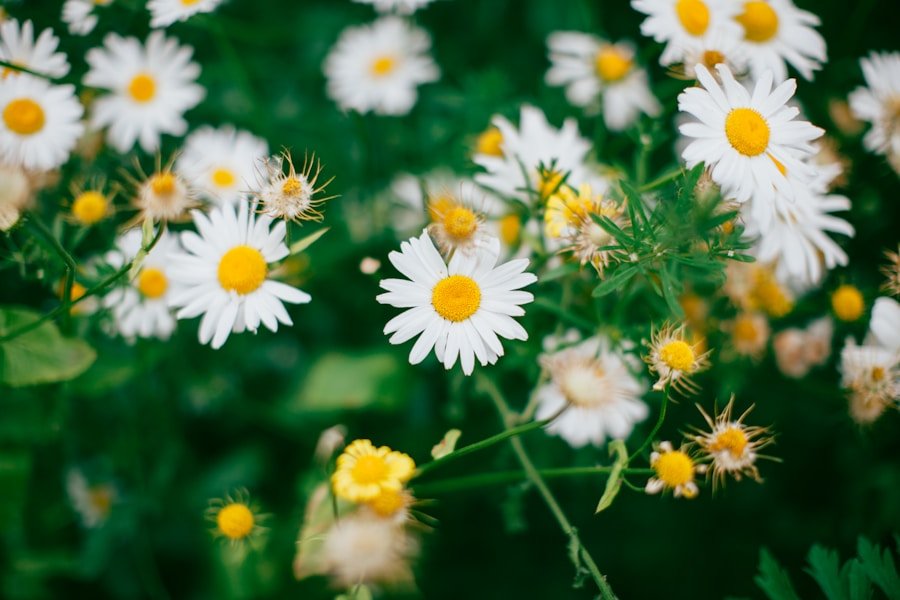

When it comes to choosing the right variety of daisies for your garden, there are several factors to consider. First, you’ll want to think about the climate and growing conditions in your area. Some daisy varieties, such as Shasta daisies, thrive in full sun and well-drained soil, while others, like painted daisies, prefer partial shade and moist soil. It’s important to select a variety that will thrive in your specific growing conditions to ensure the best results.
Another consideration when choosing daisy varieties is the size and color of the flowers. Some daisies produce large, showy blooms in shades of white, pink, or yellow, while others have smaller, more delicate flowers in a wider range of colors. Think about the overall aesthetic you want to achieve in your garden and choose daisy varieties that will complement your existing plants and landscaping. Additionally, consider the height and spread of the plants, as some daisy varieties can be quite tall and may require staking or support.
In addition to considering the growing conditions and aesthetic appeal of different daisy varieties, it’s also important to think about the maintenance requirements of each type. Some daisies are more low-maintenance and drought-tolerant, while others may require more frequent watering and fertilizing. By taking these factors into account, you can choose the right variety of daisies for your garden that will thrive and enhance the beauty of your outdoor space.
Preparing the Soil and Location for Planting Daisies
Before planting daisies in your garden, it’s important to prepare the soil and choose the right location for optimal growth. Daisies thrive in well-drained soil with a slightly acidic to neutral pH level. If your soil is heavy or compacted, consider adding organic matter such as compost or peat moss to improve drainage and fertility. Additionally, it’s a good idea to perform a soil test to determine the pH level and nutrient content of your soil, and make any necessary amendments based on the results.
When selecting a location for planting daisies, choose a spot that receives at least six hours of sunlight per day. While some daisy varieties can tolerate partial shade, most will perform best in full sun. It’s also important to consider air circulation and avoid planting daisies in areas that are prone to standing water or excessive moisture, as this can lead to root rot and other issues. By choosing a well-drained, sunny location for your daisies, you can set them up for success and ensure they thrive in your garden.
In addition to preparing the soil and choosing the right location for planting daisies, it’s also important to consider spacing and layout. Depending on the variety, daisies may spread and naturalize over time, so be sure to give them enough room to grow without overcrowding. Consider planting daisies in groups or drifts for a naturalistic look, and leave enough space between plants for air circulation and future growth. By taking these steps to prepare the soil and location for planting daisies, you can create an ideal environment for these beautiful flowers to flourish in your garden.
Planting and Caring for Daisies: Watering, Fertilizing, and Pruning
Once you’ve chosen the right variety of daisies for your garden and prepared the soil and location for planting, it’s time to actually plant and care for your new additions. When planting daisies, be sure to dig a hole that is slightly larger than the root ball of the plant and place it at the same depth as it was in its original container. Backfill the hole with soil and water thoroughly to settle the roots in place. It’s important to water newly planted daisies regularly until they become established, typically for the first few weeks after planting.
In addition to regular watering, daisies benefit from periodic fertilization to promote healthy growth and abundant blooms. Use a balanced fertilizer formulated for flowering plants, and apply according to the manufacturer’s instructions. Avoid over-fertilizing daisies, as this can lead to excessive foliage growth at the expense of flowers. Additionally, consider applying a layer of mulch around the base of daisy plants to help retain moisture, suppress weeds, and regulate soil temperature.
As daisies grow and mature, it’s important to keep an eye on their overall health and appearance. Deadhead spent flowers regularly to encourage continuous blooming and prevent self-seeding, if desired. Additionally, consider dividing clumps of daisies every few years to rejuvenate the plants and prevent overcrowding. By taking these steps to plant and care for daisies through watering, fertilizing, and pruning, you can ensure they remain healthy and vibrant in your garden for years to come.
Dealing with Common Pests and Diseases that Affect Daisies
While daisies are generally low-maintenance and resilient plants, they can still be susceptible to certain pests and diseases that can affect their overall health and appearance. One common pest that may affect daisies is aphids, which are small insects that feed on plant sap and can cause stunted growth and distorted foliage. To control aphids on daisies, consider using insecticidal soap or horticultural oil, or introducing natural predators such as ladybugs or lacewings.
Another potential pest issue for daisies is powdery mildew, a fungal disease that can cause a white powdery coating on leaves and stems. To prevent powdery mildew on daisies, provide adequate air circulation by spacing plants properly and avoiding overhead watering. If powdery mildew does occur, consider using a fungicide labeled for this specific disease, or removing affected plant parts to prevent its spread.
In addition to aphids and powdery mildew, daisies may also be susceptible to other pests such as spider mites, thrips, and slugs, as well as diseases like botrytis blight and root rot. By monitoring your daisies regularly for signs of pest or disease issues, you can take proactive measures to address these problems before they become severe. Consider using integrated pest management techniques such as cultural controls, biological controls, and least-toxic pesticides to manage pests and diseases on your daisies effectively.
Propagating Daisies: How to Divide and Multiply Your Plants
Once your daisy plants have become established in your garden, you may find yourself wanting to propagate them to create more plants or expand their presence in your landscape. One common method of propagating daisies is through division, which involves separating clumps of mature plants into smaller sections that can be replanted elsewhere. To divide daisies, carefully dig up the entire clump with a shovel or garden fork, then use a sharp knife or spade to cut through the root ball into smaller sections.
When dividing daisies, be sure to include both roots and foliage in each new section, and replant them at the same depth as they were originally growing. Water thoroughly after replanting divided daisy sections to help them establish quickly in their new location. Division is typically best done in early spring or late summer when plants are actively growing but not in full bloom.
In addition to division, daisies can also be propagated through other methods such as seed sowing or stem cuttings. Collect seeds from mature daisy flowers once they have dried on the plant, then sow them directly into prepared soil in fall or early spring. For stem cuttings, take 3-4 inch sections of healthy stems with several sets of leaves attached, then dip the cut ends in rooting hormone before planting them in a well-draining potting mix. By using these methods to propagate daisies through division, seed sowing, or stem cuttings, you can multiply your plants and create new additions for your garden with ease.
Designing Your Garden with Daisies: Companion Planting and Landscape Ideas
Daisies are versatile plants that can be used in a variety of garden designs and landscaping schemes to add color, texture, and visual interest. When designing your garden with daisies, consider companion planting them with other perennials such as coneflowers, black-eyed Susans, or ornamental grasses for a naturalistic look that attracts pollinators and wildlife. Additionally, daisies can be used as border plants along pathways or mixed into mixed perennial beds for a cottage garden feel.
In addition to companion planting ideas, consider using daisies in landscape designs such as meadows or prairie gardens where they can naturalize and create a wildflower effect. Daisies also work well in rock gardens or containers where their cheerful blooms can be showcased up close. When designing with daisies, think about their height, spread, and bloom time to create harmonious combinations that enhance the overall beauty of your outdoor space.
Another way to incorporate daisies into your garden design is by using them as cut flowers for bouquets and floral arrangements. Daisies have long been popular as cut flowers due to their long vase life and cheerful appearance. Consider planting a dedicated cutting garden with different varieties of daisies that can be harvested regularly for use in fresh arrangements throughout the growing season.
Harvesting and Using Daisies for Bouquets and Floral Arrangements
Once your daisy plants have matured and produced an abundance of blooms in your garden, you may find yourself wanting to harvest them for use in bouquets and floral arrangements. When harvesting daisies for cut flowers, do so early in the morning when they are at their freshest and most hydrated. Use sharp scissors or pruners to make clean cuts on long stems with multiple buds that are just beginning to open.
After harvesting daisy flowers, immediately place them in a bucket of water with floral preservative added to help prolong their vase life. Remove any foliage from the lower portion of the stems that will be submerged in water to prevent bacterial growth. Once you’ve gathered enough flowers for your arrangement, begin arranging them in a clean vase filled with fresh water.
When using daisies in bouquets or floral arrangements, consider combining them with other complementary flowers such as roses, lilies, or snapdragons for a mixed look with varying textures and colors. Daisies also work well on their own in simple arrangements that showcase their natural beauty without distraction. Whether used alone or combined with other flowers, daisies make a charming addition to any bouquet or floral arrangement with their cheerful blooms and long-lasting vase life.
In addition to fresh arrangements, consider drying daisy flowers for use in dried bouquets or crafts such as wreaths or potpourri. To dry daisy flowers, hang them upside down in small bunches in a warm, dark place with good air circulation until they are completely dry. Once dried, use them in various decorative projects around your home or give them as thoughtful gifts to friends and family.
In conclusion, growing daisies in your garden can bring joy and beauty throughout the growing season with their cheerful blooms and low-maintenance nature. By choosing the right variety of daisies for your specific growing conditions and aesthetic preferences, preparing the soil and location for planting them properly, caring for them through watering, fertilizing, and pruning techniques, addressing common pests and diseases that may affect them proactively through monitoring and management strategies, propagating them through division or other methods to multiply your plants easily designing your garden with them through companion planting ideas or landscape designs that enhance their natural beauty harvesting them for use in bouquets or floral arrangements that showcase their charm both fresh or dried you can enjoy the many benefits of these delightful flowers year after year in your outdoor space. Whether used alone or combined with other flowers or foliage in arrangements or crafts,daises bring a touch of whimsy and charm wherever they are placed.
In conclusion, growing daisies in your garden can bring joy and beauty throughout the growing season with their cheerful blooms and low-maintenance nature. By choosing the right variety of daisies for your specific growing conditions and aesthetic preferences, preparing the soil and location for planting them properly, caring for them through watering, fertilizing, and pruning techniques, addressing common pests and diseases that may affect them proactively through monitoring and management strategies, propagating them through division or other methods to multiply your plants easily, designing your garden with them through companion planting ideas or landscape designs that enhance their natural beauty, and harvesting them for use in bouquets or floral arrangements that showcase their charm both fresh or dried, you can enjoy the many benefits of these delightful flowers year after year in your outdoor space. Whether used alone or combined with other flowers or foliage in arrangements or crafts, daises bring a touch of whimsy and charm wherever they are placed.