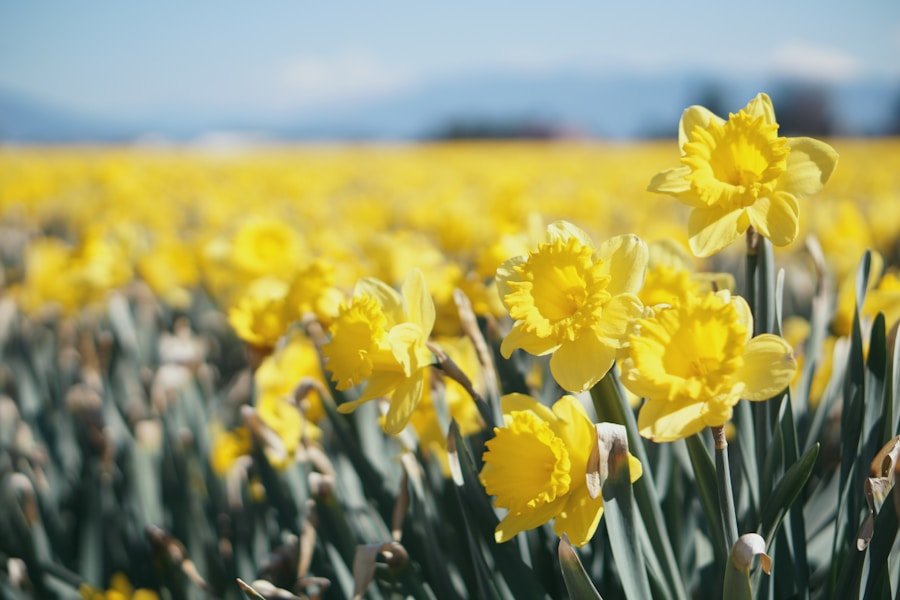

Daffodils have a long and rich history as a symbol in various cultures around the world. The flower is believed to have originated in the Mediterranean region and has been cultivated for thousands of years. In ancient Greek mythology, the daffodil was associated with the story of Narcissus, a handsome young man who fell in love with his own reflection and was transformed into a flower. This myth gave rise to the flower’s association with vanity and self-love. In medieval Europe, daffodils were often used as a symbol of chivalry and unrequited love, and were commonly depicted in heraldry and tapestries. The flower’s bright yellow color and delicate petals made it a popular motif in art and literature throughout history.
Daffodils also have a strong association with the Christian faith, particularly in the UK where they are often referred to as the “Lent Lily.” The flower blooms around the time of Easter, and its bright yellow color is seen as a symbol of the resurrection and new life. In Wales, daffodils are worn on St. David’s Day, the national day of the country, as a symbol of national pride and identity. The daffodil has also been adopted as the national flower of Wales, further cementing its cultural significance in the region.
Daffodils in Literature and Art
Daffodils have been a popular subject in literature and art for centuries, with their vibrant color and delicate form making them a favorite among poets, painters, and other artists. One of the most famous literary references to daffodils is in William Wordsworth’s poem “I Wandered Lonely as a Cloud,” in which he describes coming across a field of daffodils and being filled with joy at the sight. The poem has become one of the most beloved works in the English language, and has helped to solidify the daffodil’s association with beauty, nature, and inspiration.
In art, daffodils have been depicted in a wide range of styles and mediums, from traditional still-life paintings to modern abstract interpretations. The flower’s bright yellow color and unique shape make it a striking subject for artists, and it has been featured in countless works throughout history. Vincent van Gogh, for example, painted several famous still-life compositions featuring daffodils, capturing their vibrant color and delicate form with his characteristic bold brushstrokes. In contemporary art, daffodils continue to be a popular subject, with artists using the flower to explore themes of beauty, transience, and renewal.
The Cultural Significance of Daffodils
Daffodils hold significant cultural importance in many parts of the world, particularly in countries where they are native or have been naturalized. In addition to their associations with mythology, religion, and literature, daffodils are also used as symbols of national identity and pride. In Wales, for example, the daffodil is a beloved emblem that is closely associated with the country’s natural beauty and rich cultural heritage. The flower is often used in traditional celebrations and festivals, and is seen as a powerful symbol of Welsh identity.
In other cultures, daffodils are associated with different meanings and traditions. In China, for example, daffodils are seen as symbols of good fortune and prosperity, and are often given as gifts during the Chinese New Year. In Iran, daffodils are used in traditional Nowruz (Persian New Year) celebrations as a symbol of rebirth and renewal. The flower’s bright yellow color and early blooming season make it a fitting symbol for the arrival of spring and the promise of new beginnings.
The Botanical Characteristics of Daffodils
Daffodils belong to the genus Narcissus, which includes over 50 different species and thousands of cultivated varieties. The flowers are characterized by their trumpet-shaped central corona surrounded by six petal-like tepals, which can be white, yellow, or orange in color. Daffodils are perennial plants that grow from bulbs, and are known for their early spring blooming season. They are typically found in temperate regions around the world, and are widely cultivated for their ornamental value.
Daffodils are relatively easy to grow and care for, making them popular choices for home gardens and landscaping. They prefer well-drained soil and plenty of sunlight, and can be planted in borders, rock gardens, or containers. Daffodil bulbs should be planted in the fall for spring blooming, and will multiply over time to create larger clumps of flowers. The plants are also relatively resistant to pests and diseases, making them low-maintenance additions to any garden.
Daffodils as a Sign of Spring and Renewal
Daffodils are often seen as harbingers of spring, with their bright yellow blooms signaling the end of winter and the arrival of warmer weather. In many cultures, daffodils are associated with themes of renewal, rebirth, and new beginnings. The flower’s early blooming season makes it a welcome sight after months of cold and darkness, and its cheerful color is seen as a symbol of hope and optimism.
In addition to their symbolic significance, daffodils also play an important ecological role as early pollinator plants. Their nectar-rich flowers attract bees, butterflies, and other pollinators that are essential for the health of ecosystems. By providing food for these important insects early in the season, daffodils help to support biodiversity and contribute to the overall health of natural environments.
Daffodils as a Symbol of Optimism and Hope
Daffodils have long been associated with positive emotions such as optimism, hope, and joy. Their bright yellow color is often seen as a symbol of happiness and positivity, and their early blooming season is a welcome reminder that warmer days are ahead. In times of hardship or uncertainty, daffodils can serve as a powerful reminder that better days are on the horizon.
The flower’s association with hope is also reflected in its use as a symbol for various charitable causes. In many countries, daffodils are used to raise awareness and funds for cancer research and support services. The Canadian Cancer Society’s Daffodil Campaign, for example, uses the flower as a symbol of hope for those affected by cancer, and encourages people to wear daffodil pins or donate to support cancer research.
How to Incorporate Daffodils into Your Life
There are many ways to incorporate daffodils into your life, whether through gardening, art, or simply enjoying their beauty in nature. If you have a garden or outdoor space, consider planting daffodil bulbs in the fall for a burst of color in the spring. Daffodils can be planted in borders, rock gardens, or containers, and will naturalize over time to create larger clumps of flowers.
If you’re not a gardener, you can still enjoy daffodils by incorporating them into your home decor or artwork. Fresh-cut daffodils make beautiful arrangements that can brighten up any room, and their cheerful color can lift your spirits on even the gloomiest days. You can also find daffodil-themed artwork or accessories to add a touch of springtime beauty to your home.
In addition to their aesthetic appeal, daffodils also make thoughtful gifts for friends or loved ones. A bouquet of fresh-cut daffodils can bring joy to someone’s day, while potted daffodil bulbs make long-lasting gifts that can be enjoyed year after year. Whether you’re planting them in your garden or enjoying them indoors, daffodils are sure to bring a touch of beauty and optimism into your life.