
Flowers have been used as symbols in religious traditions for centuries, representing various aspects of spirituality, faith, and the divine. The use of flowers in religious ceremonies and rituals can be traced back to ancient civilizations, where they were seen as a way to connect with the natural world and the spiritual realm. In many religious traditions, specific flowers hold deep symbolic meanings and are used to convey important messages or emotions. The use of flowers in religious symbolism is a testament to the profound connection between nature and spirituality, and the ways in which the natural world can be a source of inspiration and guidance for those seeking a deeper understanding of the divine.
The Significance of Roses in Different Religious Traditions
Roses have long been associated with love, beauty, and passion, making them a popular symbol in various religious traditions. In Christianity, the rose is often seen as a symbol of the Virgin Mary, representing her purity and grace. In Islam, the rose is also highly revered, with references to it in the Quran as a symbol of beauty and paradise. In Hinduism, the rose is associated with the goddess Lakshmi, symbolizing prosperity and fertility. The significance of roses in different religious traditions highlights their universal appeal as a symbol of love and devotion, and their ability to transcend cultural and religious boundaries.
The Religious Meaning of Lilies and Their Presence in Various Ceremonies
Lilies are another flower that holds deep religious significance in many traditions. In Christianity, the lily is often associated with the Virgin Mary and is seen as a symbol of purity, innocence, and resurrection. Lilies are commonly used in Christian ceremonies such as Easter and funerals, where they serve as a reminder of the hope and renewal that comes with the resurrection of Christ. In Buddhism, the lily is also highly revered, symbolizing enlightenment and the purity of body, speech, and mind. The presence of lilies in various religious ceremonies underscores their universal symbolism as a representation of purity, renewal, and spiritual awakening.
The Symbolism of Lotus Flowers in Eastern Religions
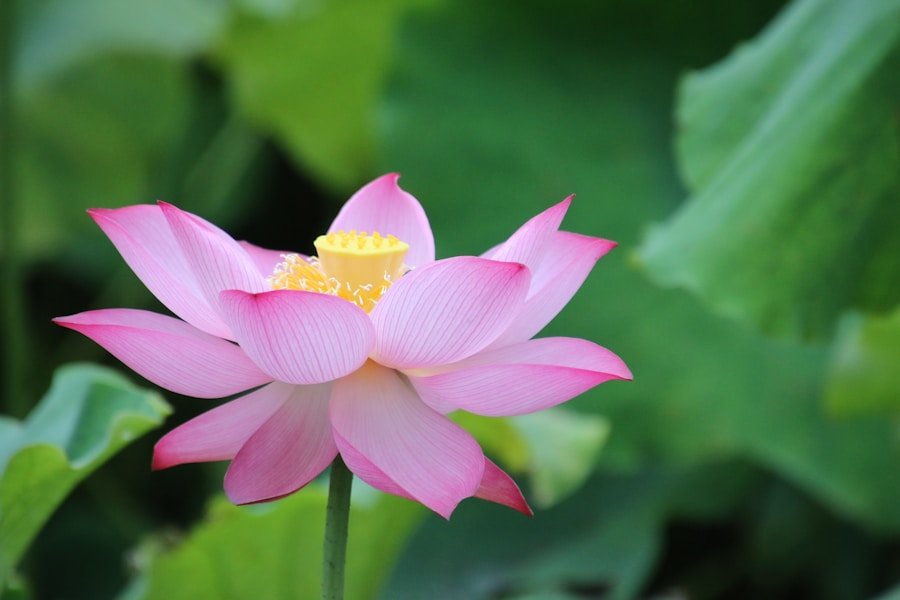
The lotus flower holds great significance in Eastern religions such as Hinduism, Buddhism, and Jainism. In Hinduism, the lotus is associated with divine beauty, purity, and transcendence, often depicted as the seat of gods and goddesses. In Buddhism, the lotus is a symbol of enlightenment and spiritual growth, as it is able to rise from murky waters and bloom into a beautiful flower. The lotus also holds significance in Jainism, where it represents spiritual awakening and liberation from worldly attachments. The symbolism of lotus flowers in Eastern religions reflects their universal appeal as a representation of spiritual growth, purity, and transcendence.
The Spiritual Meaning of Sunflowers in Christian and Native American Traditions
Sunflowers are often associated with warmth, positivity, and happiness, making them a popular symbol in both Christian and Native American traditions. In Christianity, the sunflower is seen as a symbol of faith and devotion, as it follows the movement of the sun throughout the day. The sunflower is also associated with the Virgin Mary, representing her radiant love and compassion. In Native American traditions, sunflowers are seen as a symbol of harvest and abundance, often used in ceremonies to give thanks for the bountiful gifts of the earth. The spiritual meaning of sunflowers in both Christian and Native American traditions highlights their universal symbolism as a representation of faith, gratitude, and the interconnectedness of all living beings.
The Role of Marigolds in Hindu and Mexican Day of the Dead Celebrations
Marigolds hold deep religious significance in both Hindu and Mexican traditions, where they are used in various ceremonies and celebrations. In Hinduism, marigolds are associated with the goddess Lakshmi, symbolizing prosperity, wealth, and good fortune. They are often used in religious rituals and festivals to honor the goddess and seek her blessings for abundance and prosperity. In Mexican culture, marigolds play a central role in the Day of the Dead celebrations, where they are used to decorate altars and gravesites as a way to honor deceased loved ones. The vibrant orange color of marigolds is believed to guide spirits back to the earthly realm during this time of remembrance and celebration. The role of marigolds in Hindu and Mexican traditions underscores their universal symbolism as a representation of abundance, remembrance, and spiritual connection.
Exploring the Intersection of Nature and Religion through Flowers
The use of flowers in religious symbolism is a testament to the profound connection between nature and spirituality, and the ways in which the natural world can be a source of inspiration and guidance for those seeking a deeper understanding of the divine. From roses to lilies to lotus flowers, each flower holds deep religious significance in various traditions, representing important aspects of faith, love, purity, and spiritual growth. The universal appeal of these flowers as symbols in religious traditions highlights their ability to transcend cultural and religious boundaries, serving as a reminder of the interconnectedness of all living beings. As we continue to explore the intersection of nature and religion through flowers, we are reminded of the beauty and power of the natural world to inspire and uplift us on our spiritual journeys.